When it’s time for a new roof in Minnesota, the first fork in the road is the material: the metal roof that lasts decades, or the asphalt shingles on most of the houses on your block.
Both are solid choices here. The right one depends on how long you plan to stay, your budget, and how you feel about snow, hail, and looks. Here’s a straight comparison of metal roofing vs. asphalt shingles in Minnesota, including the part most guides skip: how each plays with solar.
Upfront Cost vs. Long-Term Value
Start with the money, because it drives most decisions.
Asphalt shingles are the budget-friendly, familiar option. They cost less up front, they’re faster to install, and nearly every roofer works with them. For a lot of Minnesota homeowners, that lower entry price is the deciding factor.
Metal roofing costs more up front, often considerably more, but it lasts far longer. The pitch is lifetime value: you may install one metal roof where you’d install two or three shingle roofs over the same span. If you plan to stay in your home for decades, that math can favor metal. If you might move in several years, shingles often make more sense.
Neither is wrong. It comes down to your timeline and your budget.
Lifespan and Minnesota Weather
This is where our climate earns a mention, because Minnesota is hard on roofs.
Asphalt shingles in Minnesota typically last around 15 to 25 years depending on quality and exposure. Our freeze-thaw cycles, summer heat, and the occasional hailstorm all chip away at that lifespan. They hold up fine, they just don’t last forever, which is why roof age matters so much for anything you put on top, like solar.
Metal roofs commonly last 40 to 70 years and shrug off a lot of what Minnesota throws at them. Snow tends to slide off metal rather than pile up, which helps with snow load and can reduce ice dams. Metal also stands up well to wind. On hail, it’s a tradeoff: metal resists puncture but can dent, while shingles can crack and lose granules. For what serious hail does to either, see our storm damage repair guide.
Looks, Noise, and Other Real-World Factors
A few things homeowners actually ask about.
Appearance. Shingles offer a classic, blend-in look that matches most Minnesota neighborhoods. Metal has come a long way and now comes in many styles and colors, from standing seam to metal shingles, but it still reads as a more distinctive choice.
Noise. The “rain on a tin roof” worry is mostly outdated. With proper decking and underlayment, a modern metal roof isn’t dramatically louder than shingles.
Snow shedding. Metal shedding snow is usually a plus, but be mindful of where it slides, over doorways and walkways you may want snow guards. It’s a small design detail a good roofer plans for.
The Solar Angle: Which Roof Is Better for Panels?
Here’s the crossover most roofing comparisons ignore, and it matters if solar is anywhere in your plans.
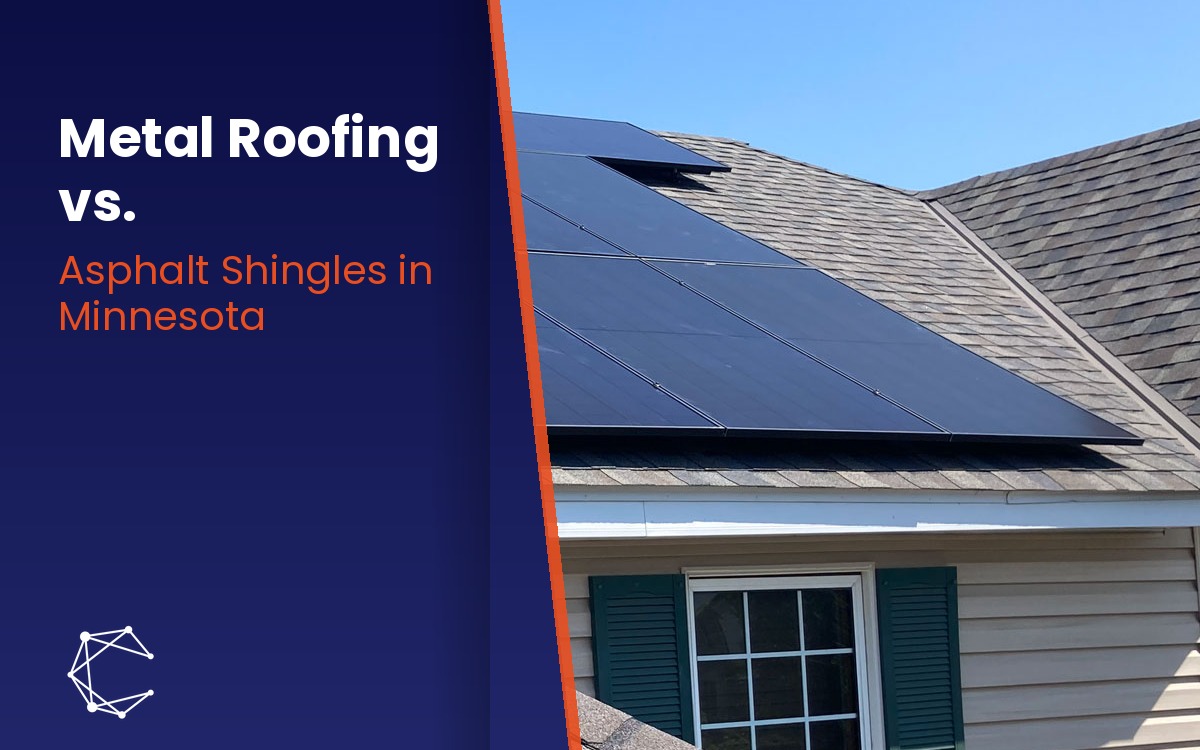
Both materials work with solar, but the details differ. Asphalt shingle roofs are the most common surface for solar mounts, and installers attach to them all day long with proper flashing, as covered in our guide on whether solar panels damage your roof. Standing-seam metal roofs are arguably even better for solar, because panels can often clamp directly to the seams without drilling holes, which means fewer penetrations.
The bigger point is timing. Because a metal roof outlasts a solar system and shingles may not, matching your roof plan to your solar plan avoids paying to remove and reinstall panels later. If solar is on your horizon, factor it into the roofing decision now. Because Centauri does both roofing and solar, we can plan them together, which you can see on the Centauri homepage. For neutral roofing guidance, the U.S. Department of Energy is a useful reference.
Frequently Asked Questions
Is a metal roof or asphalt shingles better in Minnesota?
Both work well here. Asphalt shingles cost less up front and suit shorter timelines; metal costs more but lasts 40 to 70 years, sheds snow, and resists wind. If you’re staying for decades, metal’s lifetime value can win. If you might move sooner, shingles often make more sense.
How long does each roof last in Minnesota?
Asphalt shingles typically last around 15 to 25 years in Minnesota’s climate, while metal roofs commonly last 40 to 70 years. Freeze-thaw cycles, heat, and hail all affect shingle lifespan more than metal.
Which roof is better for solar panels?
Both work. Asphalt shingle roofs are the most common surface for solar and mount easily with proper flashing. Standing-seam metal roofs are arguably better because panels can clamp to the seams with fewer roof penetrations.
Is a metal roof noisy in the rain?
Not significantly with modern construction. Proper decking and underlayment keep a metal roof close to shingles in sound. The loud “tin roof” reputation comes from older, uninsulated installs.
Does a metal roof help with snow and ice dams in Minnesota?
Generally yes. Snow tends to slide off metal rather than accumulate, which reduces snow load and can help with ice dams. Plan snow guards over doorways and walkways so sliding snow lands safely.
Get a Roof That Fits Your Plans, Solar Included
The best roofing choice depends on your budget, your timeline, and whether solar is in your future. Centauri handles both roofing and solar, so we help you pick a roof that fits the whole picture, not just the next few years. Start at the Centauri homepage to see how roofing and solar connect.
Request a free roofing consultation and we’ll compare metal and shingles for your home and your goals.