
Roof Replacement With Solar Panels in Minnesota
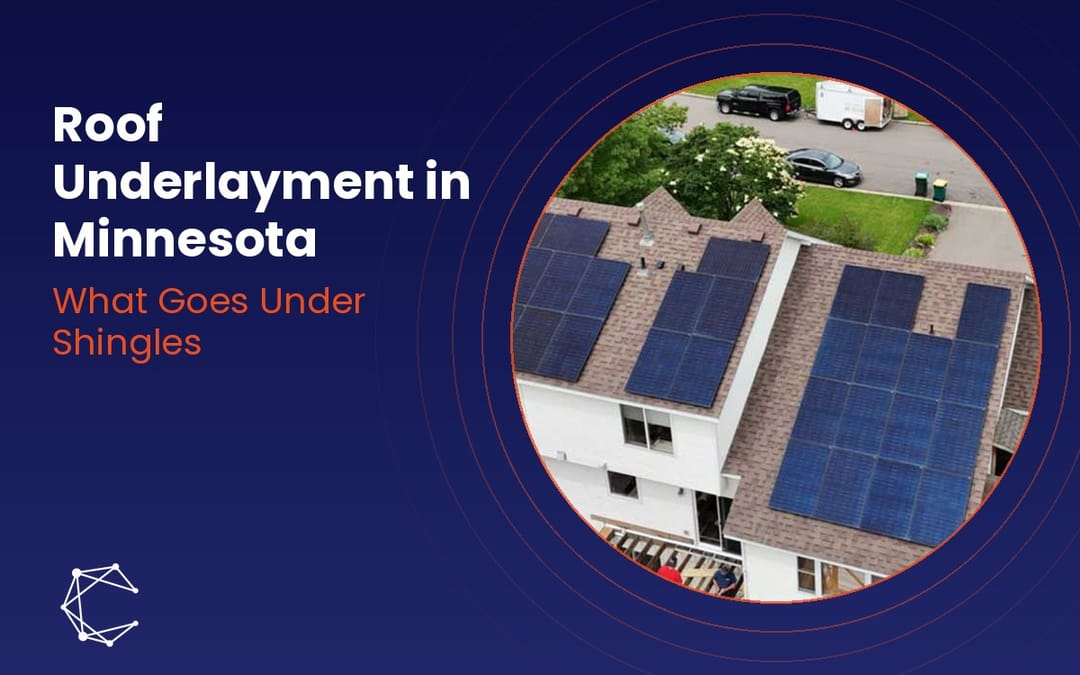
Your roof is failing and there are twenty-four panels bolted to it. That is not a dead end, and it does not mean the array has to come off permanently. Roof replacement with solar panels is a normal, routine job in Minnesota, and the trade has a name for it: detach and reset.
Here is what actually happens, what drives the price, and the sequencing mistakes that turn a straightforward project into an expensive one.
What “detach and reset” actually means
Detach and reset (installers usually shorten it to D&R) is exactly what it sounds like. A qualified crew removes the modules and racking, labels and stores everything, the roofing crew tears off and replaces the roof, and then the solar crew remounts the array, reseals every penetration, reconnects the electrical, and confirms the system is producing again.
It is not a teardown. Your panels, your inverter, your monitoring, and in most cases your warranties all survive the process, provided the work is done by people qualified to touch a live PV system.
The part homeowners underestimate is the electrical half. Pulling panels is the easy day. Reconnecting an array correctly, verifying string voltages, confirming rapid shutdown function, and getting the system back online is licensed work, and in Minnesota it usually means a fresh electrical inspection.
Why sequencing matters more than anything else
The single most expensive mistake is letting a roofing crew handle the panels.
Roofers are good at roofs. Most are not licensed to work on an energized PV array, and a well-meaning tear-off crew that unbolts modules and stacks them against the garage can void module warranties, damage MC4 connectors, crack backsheets, and leave you arguing with two contractors about who owes you a new panel.
The right order looks like this:
- Get the roof assessed first, before you assume the panels are the problem. Leaks near an array are frequently flashing failures, not module failures. Our breakdown of whether solar panels damage your roof covers how to tell the difference.
- Line up the solar crew and the roofing crew on the same calendar. Panels off, roof done, panels back on, ideally inside the same week.
- Confirm who is pulling permits for which scope. Roofing permit and electrical permit are separate.
- Plan for a short production gap. Your system is offline while the roof is open.
What drives the cost
There is no single price for this, and any contractor who quotes one over the phone without seeing your array is guessing. The number is built from a handful of real variables:
- Panel count. Most detach and reset work is priced per module. A twelve-panel system and a thirty-six-panel system are not close.
- Racking and attachment type. Standard rail-mounted arrays on asphalt shingle come apart predictably. Ballasted, tilt-leg, or older proprietary mounting systems take longer.
- Roof complexity. Steep pitch, multiple planes, dormers, and limited staging space all add labor, the same factors that drive roof replacement cost in Minnesota generally.
- Storage and handling. Panels need somewhere safe and dry to sit. On a tight lot, that can mean off-site storage.
- Electrical reconnection and inspection. Reconnect, commission, and get the permit signed off.
- Replacement parts. Flashings and some attachment hardware are single-use. Expect to replace them rather than reuse them.
The financial argument for doing both jobs together is simple. You pay the mobilization, the staging, and the roof penetrations once instead of twice. If your roof has under ten years left and you are already planning a solar addition or a battery, doing the roof first is almost always the cheaper path over the life of the system. Panels routinely outlast a shingle roof, which is why how long solar panels last in Minnesota is a question worth answering before you schedule anything.
| Scenario | Recommended sequence | Why |
|---|---|---|
| Roof has 15+ years left | Install solar now, leave the roof alone | No reason to pay for a D&R you can avoid |
| Roof has under 10 years left, no solar yet | Re-roof first, then install | One set of penetrations, one crew, no future D&R |
| Existing array, roof failing | Detach and reset | Keeps the system, warranties, and interconnection intact |
| Existing array, storm or hail damage | Document first, then D&R through the claim | Panel removal is often a covered part of the roof scope |
Storm damage and insurance
If a hailstorm is what put you here, document everything before anyone climbs on the roof. Photograph the array, the shingles, and the gutters, and pull your production data from the monitoring portal so you have a before-and-after record. Detach and reset is frequently written into a roof claim as part of the scope, but that depends entirely on your policy and your adjuster.
Two Minnesota specifics worth knowing. Coverage, deductibles, and filing deadlines vary by policy, so read yours and file promptly. And under Minnesota Statute 325E.66, a contractor cannot advertise or promise to pay, waive, or rebate your insurance deductible. Anyone offering to make your deductible disappear is telling you something useful about how they operate. You can verify a contractor’s license through the Minnesota Department of Labor and Industry.
Our guides to storm damage roof repair and hail damage on solar panels go deeper on both sides of that claim.
What about warranties?
This is the question that keeps people from calling. The short version: warranty language varies by manufacturer and by installer, and the thing that protects you is having the work performed and documented by a qualified solar contractor. A D&R done by an unqualified crew is the scenario most likely to create a warranty problem. Keep the paperwork, keep the inspection sign-off, and keep the commissioning report.
Frequently Asked Questions
How long does a roof replacement with solar panels take?
Plan on a multi-day project rather than a single day. Panel removal is typically one day, the roof itself depends on size and complexity, and reinstall plus electrical reconnection is usually another day. Weather and inspection scheduling drive most of the variance.
Can my roofer just take the panels off?
They should not. Working on an energized PV array is licensed electrical work, and improper handling can damage modules and connectors and create warranty disputes. Have a qualified solar contractor handle detach and reset, and coordinate the two crews.
Will my solar system still work the same afterward?
Yes, when it is reinstalled correctly. The array should be commissioned and verified after reconnection so you can confirm production matches what it was before. Compare your monitoring data before and after as a check.
Do I need new permits for a detach and reset?
Usually yes. Roofing and electrical are separate permit scopes in most Minnesota jurisdictions, and reconnecting the system generally triggers an electrical inspection. Your contractor should handle the filings.
Should I add panels or a battery while the roof is off?
It is the best window you will get. The staging is already up and the roof is already open, so expanding the array or upgrading equipment costs less in labor than doing it as a separate project later.
Planning a re-roof on a solar home?
If your roof is nearing the end and there is an array sitting on it, the worst move is waiting until there is a leak and calling whoever answers first. Get both scopes assessed together. Centauri Systems handles solar panel removal and reinstallation alongside roof replacement, so one team owns the sequencing, the reconnection, and the inspection. Start with a look at what makes a good roof for solar, then get in touch and we will walk your roof with you.


0 Comments