
Solar Panels on a Pole Barn in Minnesota
A pole barn or machine shed is a big, simple, open roof. Plenty of Minnesota property owners look at it and think the same thing: that is a lot of empty space facing the sun. They are not wrong, but a barn is not a house, and the differences decide whether solar there is smart or a headache.
This guide covers what is different about putting solar panels on a pole barn, shop, or machine shed in Minnesota, and what to check before you move forward.
Why a Barn Roof Looks So Good
Barns tend to have what solar installers like: a large, unobstructed roof plane, few vents and chimneys, and often a good orientation because they were sited for the yard rather than a street. There is less shading from neighboring houses, and the array is out of sight of the neighbors.
What a barn rarely has is a big electrical load. That flips the usual question. On a house, the roof is the limit. On a barn, the roof is generous and your actual electricity use is the limit. A system is sized to what you consume, not to how many panels the roof could hold. Minnesota’s 1:1 net metering, set by state law, lets excess production offset what you use, which is why sizing to your real usage matters. Our guide to how many solar panels you need in Minnesota walks through that math.
The Roof Itself: Steel Panels and Trusses
Most pole barns are covered in steel roofing, usually the exposed-fastener type rather than standing seam. That affects how the panels attach. Our post on solar panels on a metal roof breaks down the two kinds and why the difference matters for mounting and for sealing.
Underneath, a pole building is framed differently from a house. Trusses may be spaced farther apart, and the structure was designed around a particular roof load. Panels add weight, and Minnesota roofs also carry snow. Before anything is installed, the structure should be checked for whether it can carry the array on top of its snow load. We cover the underlying idea in roof snow load in Minnesota.
Roof Age Matters More Than You Think
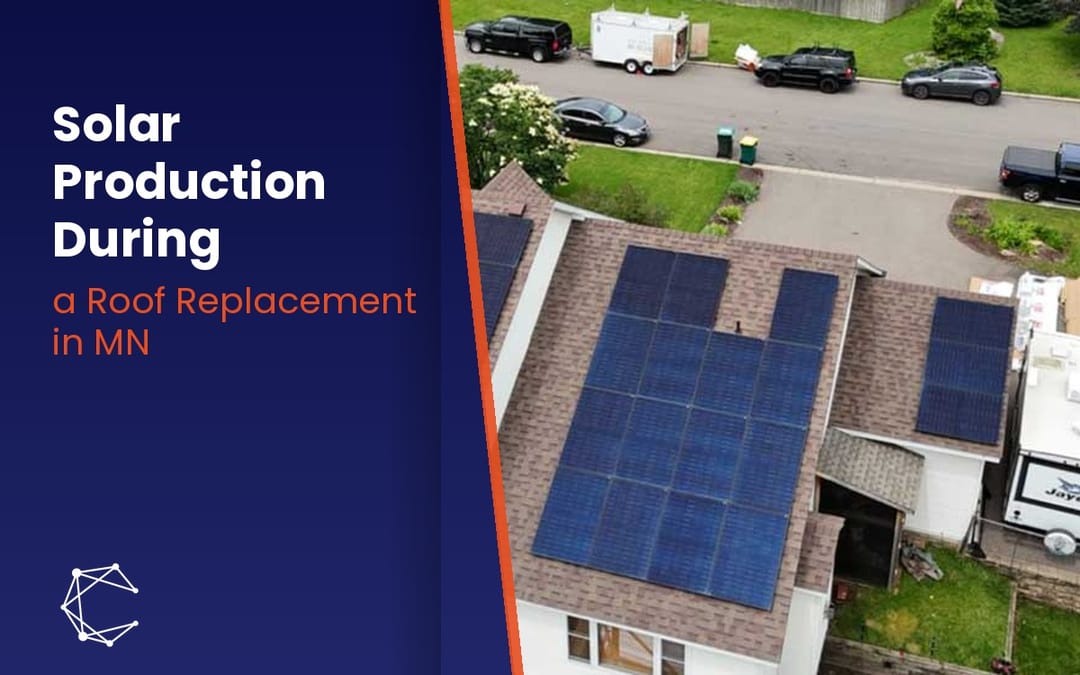
Barn roofs are often older and less maintained than the house roof. Loose fasteners, worn washers, rust, and old sealant all become problems once panels are bolted on, because the array will be there for decades. If the steel is near the end of its life, the better sequence is to fix the roof first, then add solar. If you are weighing that call, see roof replacement with solar panels in Minnesota.
How the Power Gets to Where You Use It
This is the big practical question for a barn. The panels generate power at the barn, and you usually want that power to offset the bill at the house or at the barn itself, depending on how the property is metered. Options include:
- Feeding the barn only, if the barn has its own service and meter and a real load, such as a shop, welding equipment, or livestock operation.
- Running power to the house, which usually means a trenched electrical run from the barn to the main service. Distance matters here, because long runs take more wire and more labor.
- Moving the array closer to the house, with a ground mount, if the barn is far away. Our comparison of ground-mount vs roof-mount solar in Minnesota helps with that decision.
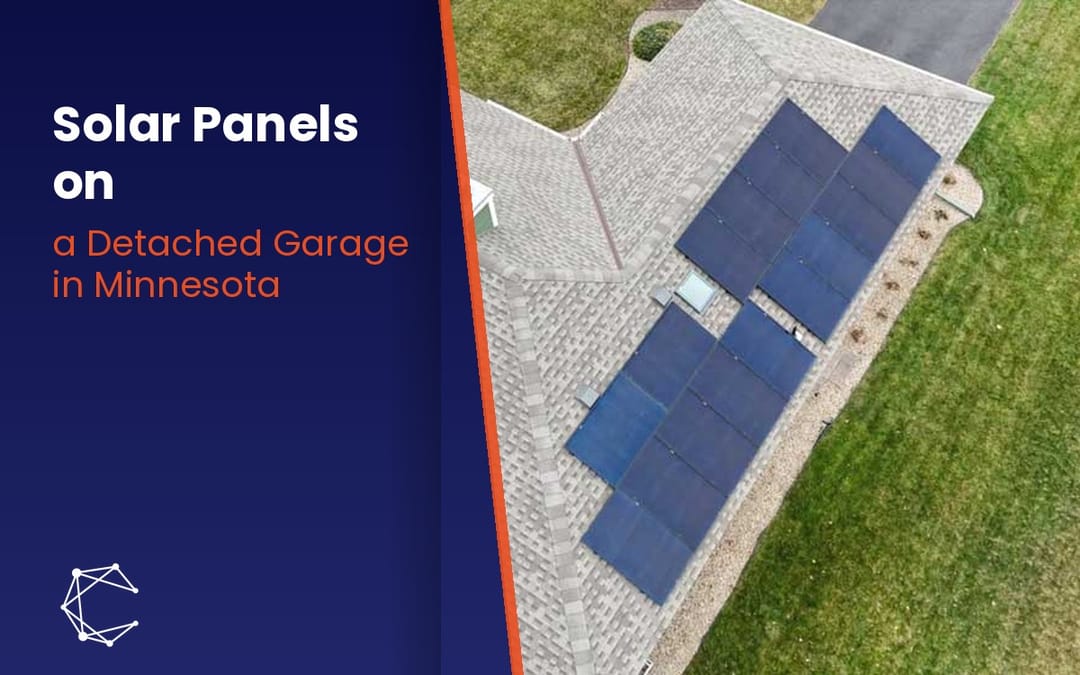
Which route is best depends on your utility, your service setup, and local requirements. The same questions come up for a garage, which we cover in solar panels on a detached garage.
Agricultural Properties Have Their Own Wrinkles
If the barn is part of a working farm, there may be extra considerations around how the building is used and insured, and around utility rules for your service. Customers of any Minnesota utility can go solar with Centauri, including co-ops. For the wider farm picture, see solar for farms in Minnesota. The University of Minnesota’s Extension service is also a useful resource for on-farm energy questions.
Permits, Insurance, and the Boring Stuff
A barn solar project still needs an electrical permit and a utility interconnection. Call your insurance agent before the install too, because a building outside the main house may be covered differently. Our post on solar permits for Minnesota homeowners explains the usual process, and solar panels and home insurance covers the coverage question.
Frequently Asked Questions
Can you put solar panels on a pole barn?
Yes, in many cases. The roof, the trusses, and the electrical setup all need to be checked first, since a pole building is built differently from a house.
Do I need to reinforce my barn roof for solar?
It depends on the structure. Trusses and framing should be reviewed for the added panel weight plus Minnesota snow load before installation.
Can barn solar power my house?
It can, if the power is wired to your main service or the array is arranged to offset your house usage under your utility’s rules. That often means trenching an electrical run, so distance matters.
Is a pole barn roof good for solar?
Often it is, because the roof is large, simple, and unshaded. The limit is usually your electricity use rather than roof space.
Should I replace an old barn roof first?
If the steel is near the end of its life, it usually makes sense to fix the roof before adding panels so you do not pay to take the array off later.
See What Your Barn Can Do
Every property is different, so the best next step is a look at yours. Request a solar quote from Centauri Systems and we will talk through the barn, the house, and the best way to connect them.

0 Comments